
JULY 2003
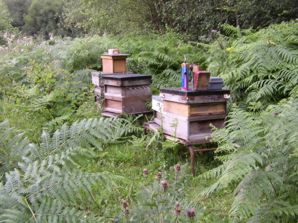
Our hives at Great Wood, Flaxton
July - a quiet month!
Quite a relief after all the hectic activity with swarms during the Spring.
Time to sort out how many colonies of bees we have.
Five hived colonies in the "net enclosure" at Monk Avenue.
Four small colonies and one small swarm at Flaxton.
One small colony in the garden at Paul's bungalow at Stockton Lane.
Regular inspections of the bee colonies every nine days were started but
no more queen cells were found. Hurrah!
Hives 1, 2 and 3 and the newly united colony all now have a Super each
on them but only Hive 3 is really producing honey. By the end of July
Paul had removed another two Supers from this have!
Paul checked the big swarm which he had taken to Flaxton and put a Super
on top of it too. Hopefully this colony will produce some Flaxton honey
for us by September.
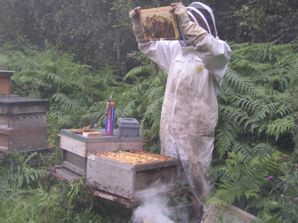
Paul inpects a brood frame at Flaxton
On 20th July Paul and Lynn went to Flaxton after the owners reported that
Ragwort was growing near the hives. This plant is poisonous to horses
and it is possible that bees collecting the poisonous nectar could produce
poisonous honey. We certainly don't want to take any chances.
Paul and Lynn pulled it all up.
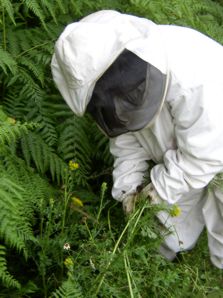
Lynn uproots the Ragwort
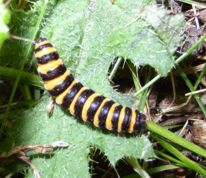
The catapillar of the Cinnabar moth: It feeds on the Ragwort
plant.
It's bright warning colours showing that it is poisonous